In the multi-account management community, many assume that simply modifying GPU model and screen resolution can fully conceal device hardware fingerprints. But reality often slaps them in the face: once a platform's risk control detection probes reach into the kernel level, simple data masking immediately fails.
On July 16, Google urgently pushed Chrome stable version 150.0.7871.128, patching 7 security vulnerabilities. The most critical was a Use-After-Free vulnerability (CVE-2026-15900) in the GPU component and related flaws in the network stack. This underlying kernel update has caused fingerprint browsers that rely on static parameter spoofing to exhibit撕裂 between low-level instruction streams and front-end parameters.
Why Kernel Rendering Fixes Trigger Risk Control Nerves
The patched vulnerability lies deep in the browser's low-level pipeline for handling hardware acceleration and rendering commands. When Google fixed the GPU process's scheduling logic after freeing memory, the timing and memory footprint characteristics of kernel-to-API rendering instructions changed.
Modern mainstream risk control engines no longer rely solely on static parameter detection. They deliver complex WebGL rendering tasks to the browser via scripts and simultaneously measure the response time and memory reclamation trajectory of underlying hardware when processing operators. If an account's front end reports a high-performance discrete GPU, but the underlying response to the latest patch's memory instruction allocation exhibits a virtualized device's latency pattern, the system immediately flags the environment as tampered.
Implicit Conflict Between Client Network Stack and Network Fingerprint
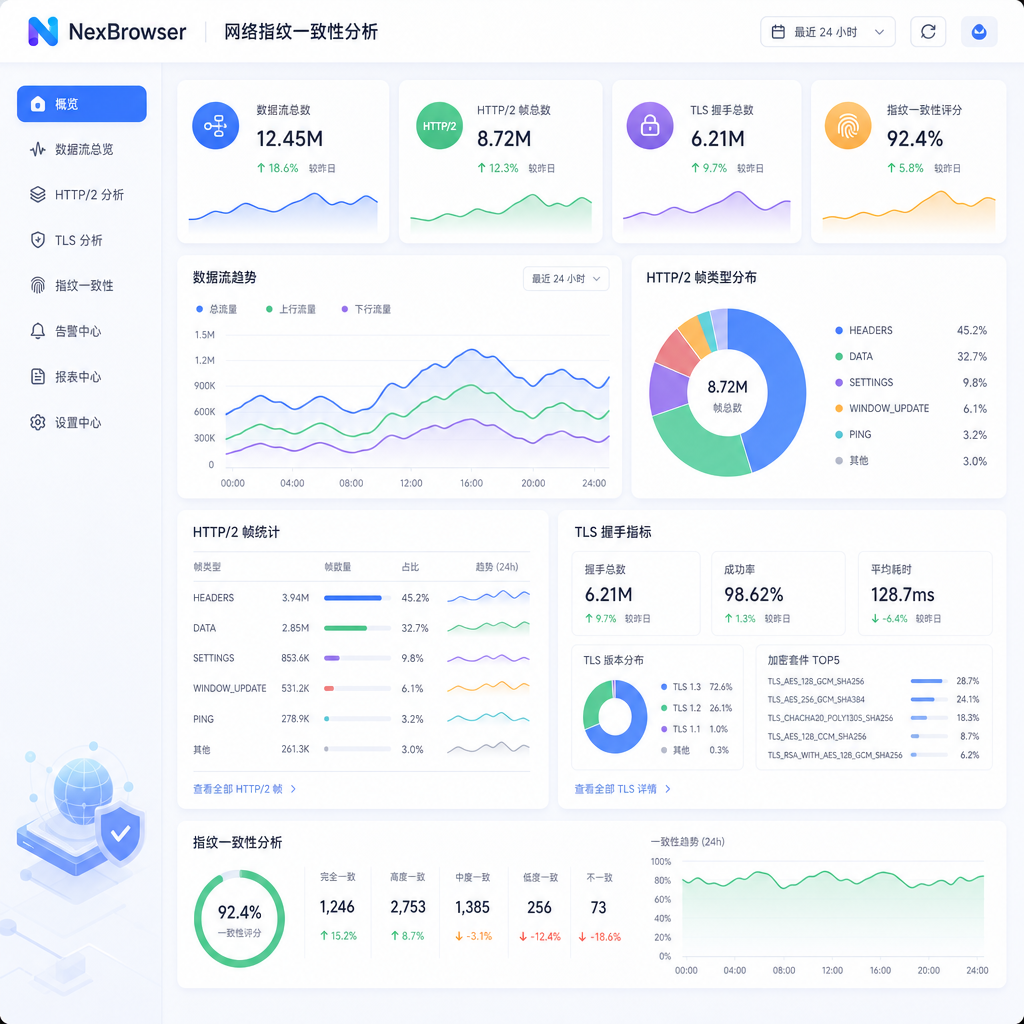
Beyond GPU rendering engine changes, this Chrome update also plugged memory vulnerabilities in the network stack, which manages HTTP/2 frame transmission ordering, TLS handshake sequence, and packet fragmentation logic.
In daily multi-account management, many teams assign proxy IPs to each environment. If the browser's network layer instructions haven't followed the latest Chromium kernel fix patches, even with an excellent NexIP proxy, the bottom-level transport layer and application layer packet characteristics will still show subtle deviations. Risk control nodes can expose the masquerade by comparing handshake protocol frame structure with the browser's claimed version.
Core Strategy for Fingerprint Browsers to Maintain High-Consistency Masks
Given the rapid iteration of browser kernels and the sinking of risk control detection dimensions, relying on simple script blocking or injected spoofing parameters can no longer maintain account security. To ensure long-term environment stability, defense must be built from these key dimensions:
- Keep the Chromium core kernel synchronized with the official codebase, ensuring foundation patches like Use-After-Free take effect immediately in the masked environment.
- Adopt hardware-level rendering instruction reconstruction instead of adding random noise at the front-end application layer, avoiding contradictions between GPU rendering results and actual parameter logic.
- Deeply bind the TLS handshake fingerprint of the network layer with the application-layer configuration, ensuring that when NexBrowser initiates data requests, the underlying transport layer packet order is completely consistent with the reported version number.
- Introduce a dynamic verification mechanism for hardware performance constants, ensuring that reported CPU core count, memory capacity, and WebGL shader compilation latency fully match the physical laws of real hardware.

Self-Check Methods for Hardware and Network Parameter Consistency
After a kernel patch is released, operations teams cannot passively wait for environments to fail; they should establish routine environment consistency checks.
First, check the rendering latency of all environments when loading complex Canvas and WebGL scenes, confirming that the data performance matches the spoofed GPU hardware tier. Second, sample the network transport layer packet arrangement to verify that the IP location's time zone and language settings match the application-layer request headers. NexBrowser integrates kernel updates with hardware fingerprint verification in its base design, helping teams reduce the risk of account correlation due to lagging kernel patches.
Finally, periodically compare the OS default font library and AudioContext audio sampling operators to eliminate subtle parameter differences exposed after patch updates.



Comments(0)